Orthodontic pacifier, Natural or Dynamic: which shape suits your baby?
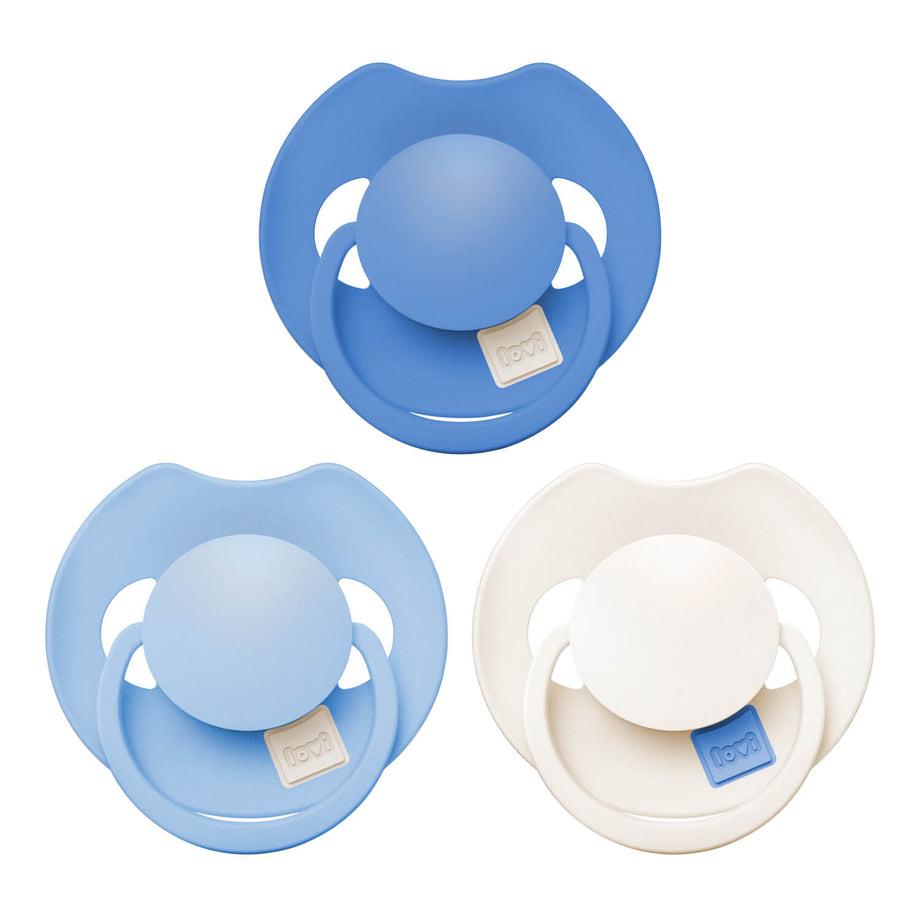
Difrax has three teat shapes: the orthodontic Dental teat with one flat side, the symmetrical oval Natural teat and the Dynamic teat from Difrax LOVI. All three have a flat base and a teat made of sturdy silicone. They were developed together with speech therapists, paediatricians and dentists. Which shape suits your baby best? That mainly depends on your baby. Below you can read how they differ.

What is an orthodontic pacifier?
An orthodontic pacifier has a shape that follows the natural development of the mouth. At Difrax, this is the Dental pacifier. You can recognise it by its one rounded and one flat side. The flat side rests on the tongue. This gives your baby more grip, so the pacifier stays in the mouth more easily. The shape spreads the pressure on the palate and stimulates the tongue and jaw muscles.
You can often use an orthodontic pacifier from birth, as long as you choose a size that matches your baby's age.
How does the Natural pacifier work?
The Natural pacifier has a symmetrical oval teat with a flat base, so it sits naturally in the mouth. The teat is made of a single layer of durable silicone. It moves only a little while your baby sucks, which keeps the tongue movement stable. Many babies accept the Natural pacifier quickly, thanks to its symmetrical shape.

1 = Teat in a natural oval shape
2 = Silicone, does not lose its shape in use
3 = Butterfly shield that fits the face
4 = Ring, easy to grasp
How does the Difrax LOVI Dynamic pacifier work?
The Dynamic pacifier from Difrax LOVI also has an oval teat, but it is built differently. The teat consists of several layers of silicone of different thickness. This lets it move with your baby's natural sucking rhythm:
- When your baby sucks, the teat stretches slightly. This gives your baby extra support when tensing the mouth and jaw muscles.
- After the sucking movement, the teat returns to its basic shape.
- With every next sucking movement, the teat moves along again. This is how the Dynamic pacifier protects the natural sucking reflex.
Are you breastfeeding? Then the Dynamic pacifier is a good choice.


Natural, Dental and Dynamic at a glance
| Natural | Dental (orthodontic) | Dynamic (Difrax LOVI) | |
|---|---|---|---|
| Teat shape | Symmetrical oval | One rounded and one flat side | Symmetrical oval |
| Build | One layer of silicone | One layer of silicone | Several layers of silicone |
| Feature | Quickly accepted | Extra grip for the tongue | Moves with the sucking rhythm |
| A good fit if | You want a familiar, simple shape | Your baby often loses the pacifier | You are breastfeeding |
Not sure? Start with one shape and see how your baby responds. If your baby is happy with the Natural or Dynamic pacifier, there is no need to switch to a Dental pacifier. View all pacifiers.
Which pacifier size should you choose?
The right size makes sucking comfortable. A teat that is too small can make your baby restless, while one that is too big takes up too much space in the mouth. The age on the packaging is a guideline. Also watch your baby: does your little one often let go of the pacifier, or do you hear a lot of smacking? Then it may be time to switch to a different size.
Is a round pacifier bad for the teeth?
You sometimes read that round, cherry-shaped pacifiers can affect the position of the teeth and jaw when used for a long time. Difrax pacifiers are not cherry-shaped: all three have a flat base, so the pacifier sits naturally in the mouth. What matters most is using the pacifier well:
- Choose the right size for your baby.
- Use the pacifier for the natural need to suck, not out of habit.
- Stop using the pacifier in good time.
Also read: are pacifiers good for your baby?

A = Round pacifier, B = Oval Difrax pacifier
Does the shape of the shield matter?
Yes. The shield should fit the face, but not press too tightly on the skin or cover too much of your baby's face. The nose must stay clear, especially with young babies, so your little one can breathe easily. All Difrax pacifiers have the butterfly-shaped shield, in 5 sizes. For every age there is a shield that supports free breathing through the nose and helps prevent skin irritation.

Why silicone and not rubber?
A natural rubber teat loses its shape in use and needs to be replaced sooner. Silicone keeps its shape, is sturdier and tears less easily. That is why Difrax makes all its teats from high-quality silicone.
Care and replacement
Rinse the pacifier after use and clean it regularly. In the first months, you can also sterilise it. Check the pacifier regularly: is it getting softer, changing colour or showing small tears? Then replace it straight away.
How long should you use a pacifier?
Your baby's natural need to suck decreases from around 6 months. It is best to use the pacifier until the permanent teeth start to form, between 1 and 2 years for most children. Wean your child off gradually: first limit the pacifier to sleep times and comfort your child in other ways, such as cuddling or a regular bedtime routine.
Want to know more? Read what an anatomical teat is, our frequently asked questions about pacifiers or pacifier or thumb?