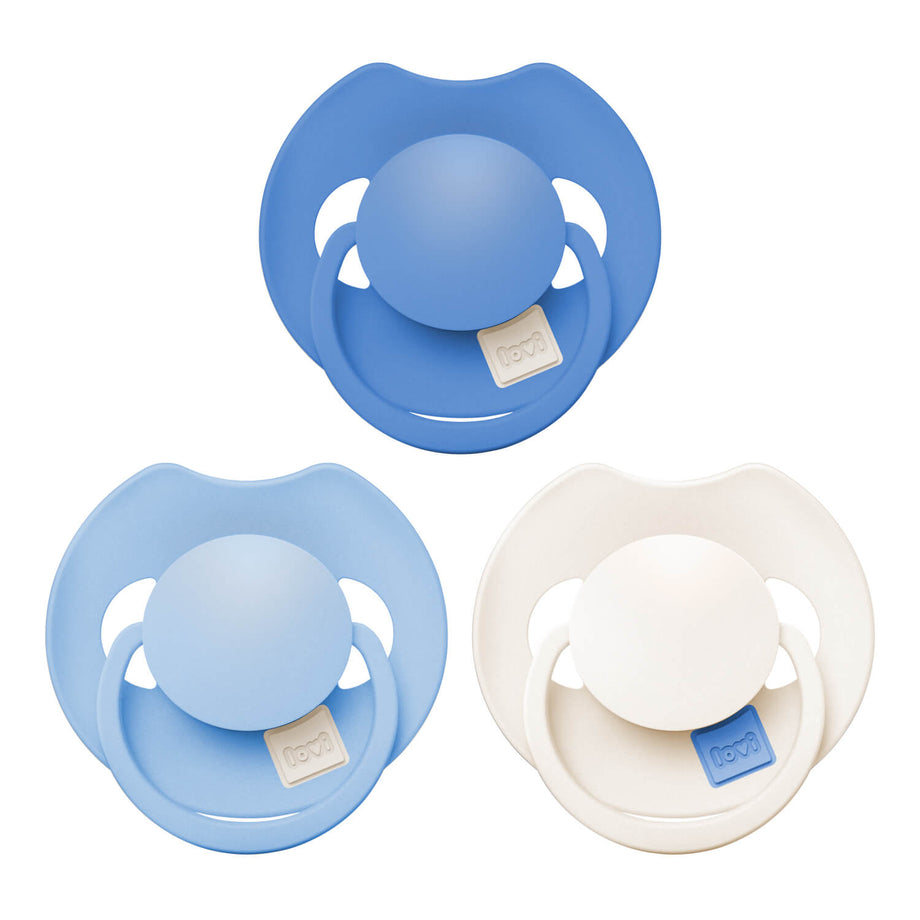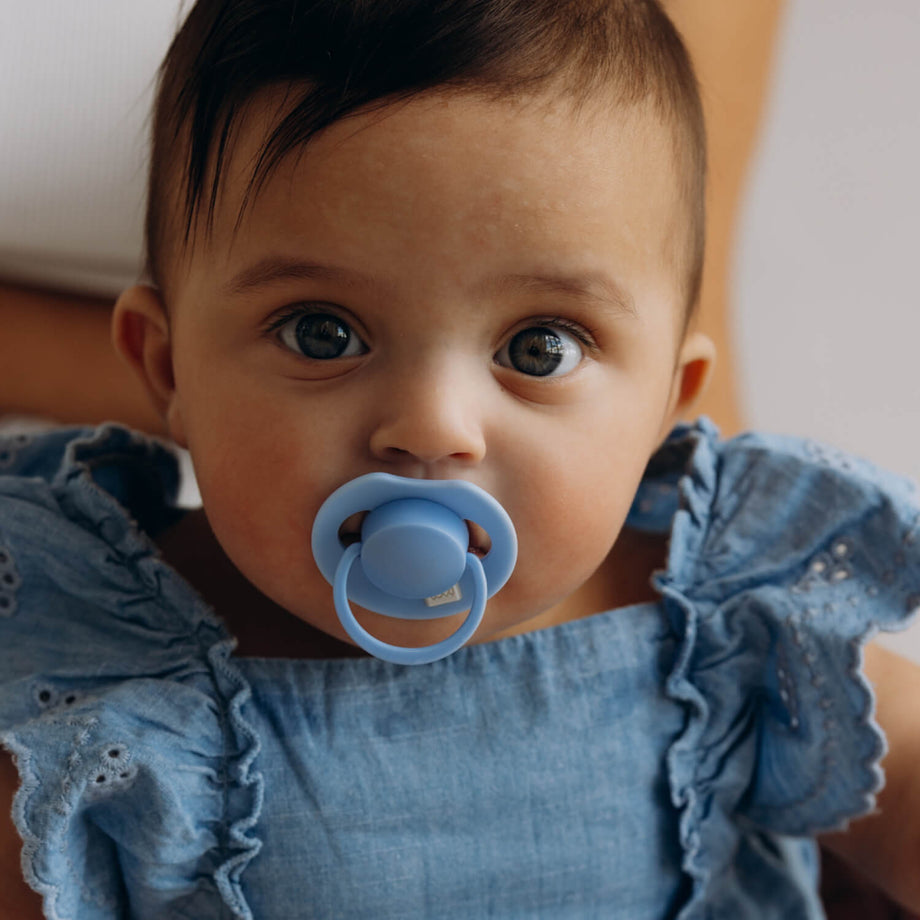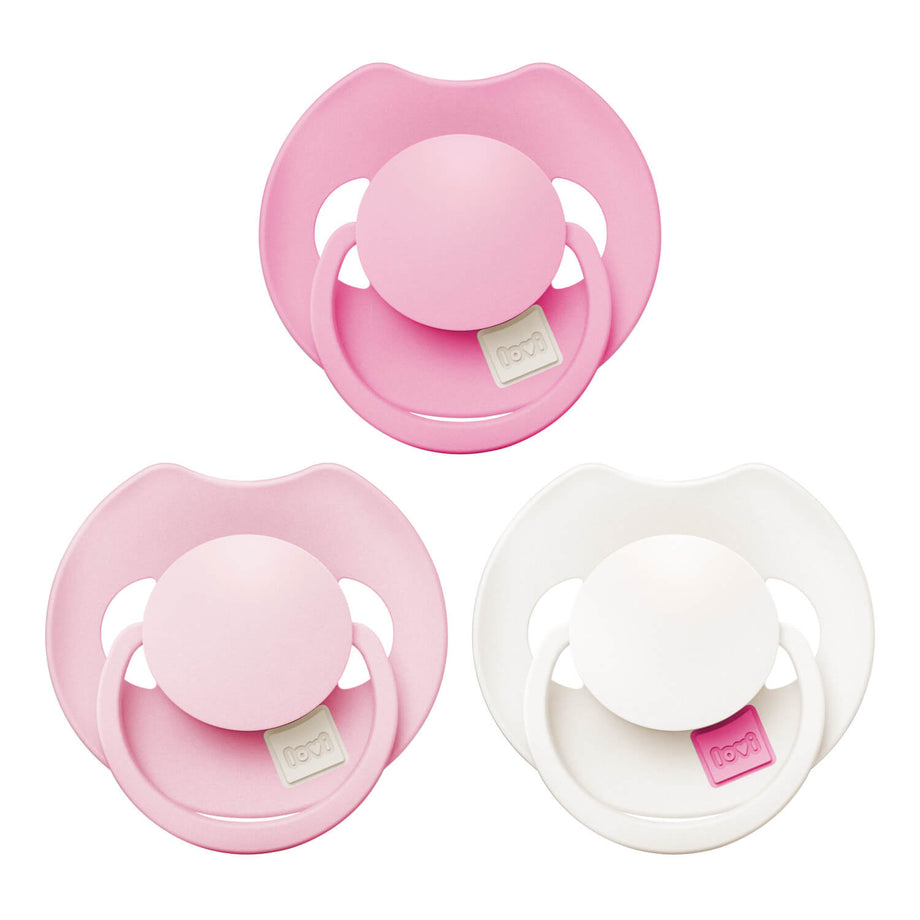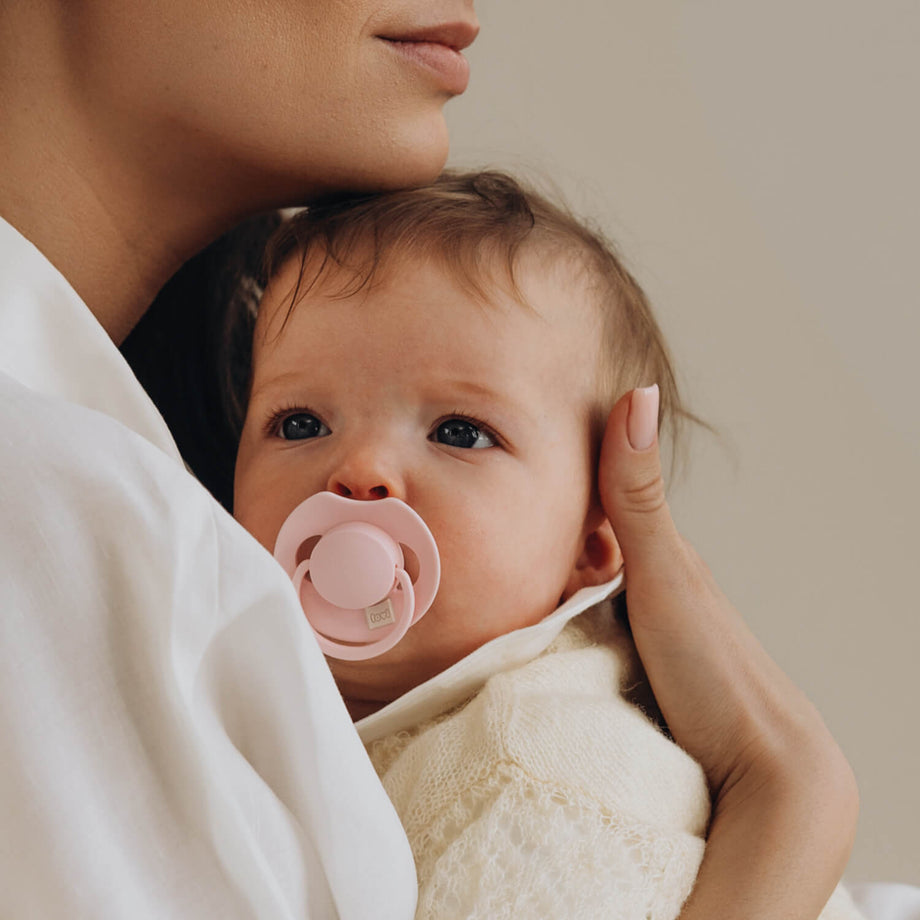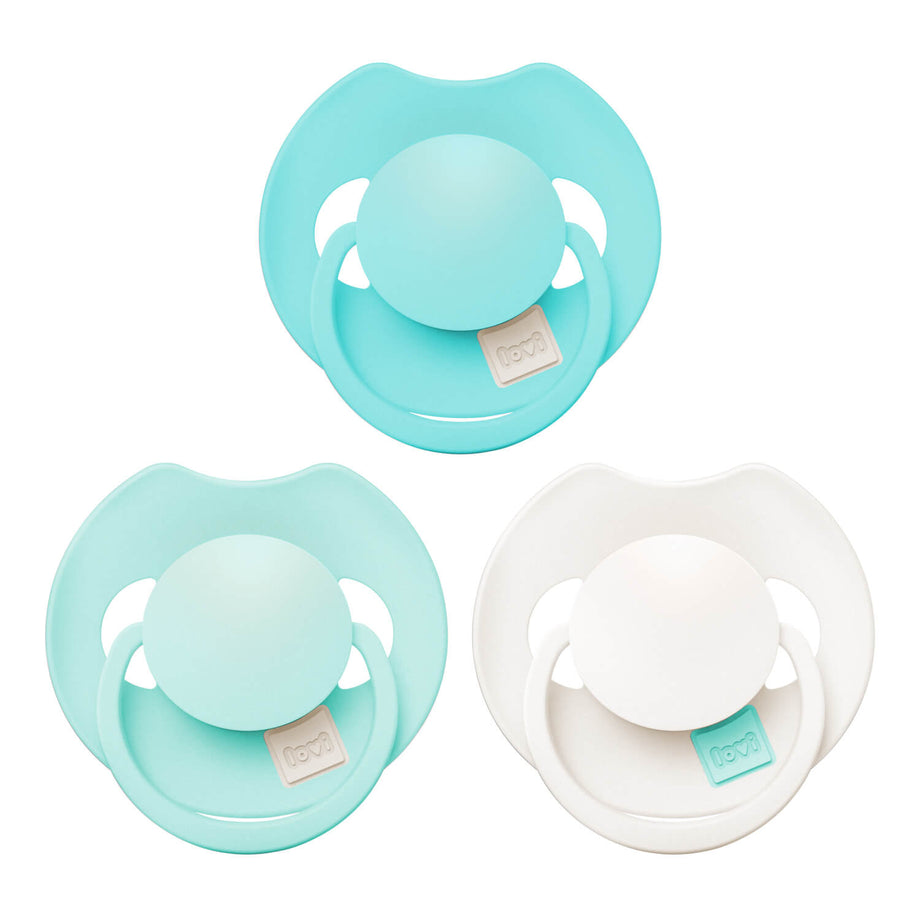
We have developed a unique collection of Dynamic pacifiers designed to mimic the natural feel of the mother's nipple, thus promoting a healthy and instinctive sucking reflex.
Careful design
The technology of the Dynamic pacifier
The dynamic part of the pacifier is made of several layers of silicone of different thicknesses. These layers allow this part of the pacifier to stretch in sync with your baby's natural sucking rhythm.
Difrax LOVI
Because we love babies
The dynamic pacifier - the secret to natural sucking.
Protection
Promotes natural jaw development
A good sucking reflex is essential for proper feeding, speech development, strengthening facial muscles and healthy breathing. The Difrax LOVI pacifier promotes your baby's growth and development.
flexible design
Why choose Difrax pacifiers
Difrax LOVI pacifiers are specially adapted to your baby's needs, ensuring comfort and safety. Thanks to their flexible design, they support the natural sucking reflex and promote your baby's sucking development. This design makes the pacifier ideal for breastfeeding, as it is safe and mimics the mother's nipple. The sucking part is made of several layers of silicone of different thicknesses, so that the top part of the pacifier moves with your baby's natural sucking rhythm.
Pacifier size is usually adapted to your baby's age:
• 0–6 months
• 6–18 months
• 18 months and up
While these ages serve as a guide, it's essential to observe your baby's needs. Some signs may indicate that it's time to change: the pacifier appears too small in the mouth, falls out easily, leaves a mark around the lips, or the baby seems to suck restlessly. If the pacifier wears out or deforms quickly, it should also be replaced. Every child develops differently: rely on their behavior and comfort.
Quelle tétine choisir pour les bébés allaités ?
For a breastfed baby, it is important to choose a pacifier that respects the natural sucking rhythm. Aphysiologicalpacifier, soft and flexible, is preferable.The Difrax LOVI pacifier hasbeen specially designed for this purpose: its dynamic teat supports the natural rhythm of sucking, swallowing and breathing. Thanks to its flexibility and medical shape, it helps to prevent nipple confusion. It is advisable to offer the pacifier after breastfeeding, to prevent your baby from getting tired of sucking the pacifier before drinking enough.
From what age can a baby be given a pacifier?
A pacifier can be given from birth, provided the baby is suckling effectively. In the case of breastfeeding, it is best to wait until lactation is well established (generally after 3 to 4 weeks) to avoid nipple confusion. If breastfeeding is not yet well established, every moment of suckling is precious for stimulating milk production – early use of a pacifier could then disrupt this process.