

Sterilisation of bottles: All you need to know
When you have a baby, you want to do everything to make sure that he or she is fed in a safe manner. Therefore, the sterilisation of bottles is an important part of the care for your baby.
By cleaning and sterilising your baby bottles, teats and all other parts thoroughly, you reduce the risk of your baby swallowing bacteria that can cause tummy ache or infections. But how often do you have to sterilise the bottles and what method is best for you? Read our tips on how to make sterilisation as easy as possible.
Why is it important to sterilise baby bottles?
Hygiene is important in order to protect the health of your baby. This is particularly important in the first months of your baby's life, when the immune system has not yet been developed.
By being careful with bottles and other baby things, you can reduce the risk of bacteria building up and causing infections. Clean and well maintained teats and bottles are important for a safe feeding routine. They give you as parents peace of mind.
When do you start sterilising bottles and how often do you have to do it?
How often you have to sterilise bottles depends on the age of your baby and your personal preferences. For the first three months, the recommendation is to sterilise the teats and bottles after each time you clean them.
After a few months you reduce the sterilisation and do it primarily when the bottles and teats are new. Also when you use the teats for the first time or if they have come into contact with dirt or raw food. If anybody is sick in the family, sterilisation is a good idea.
Different methods: Cold, hot water and steam
Each sterilisation method comes with its own advantages and disadvantages. Cold sterilisation with special tablets is practical and safe, especially when you are travelling but it takes longer than sterilisation with water or steam. Cold sterilisation can also leave a faint smell behind.
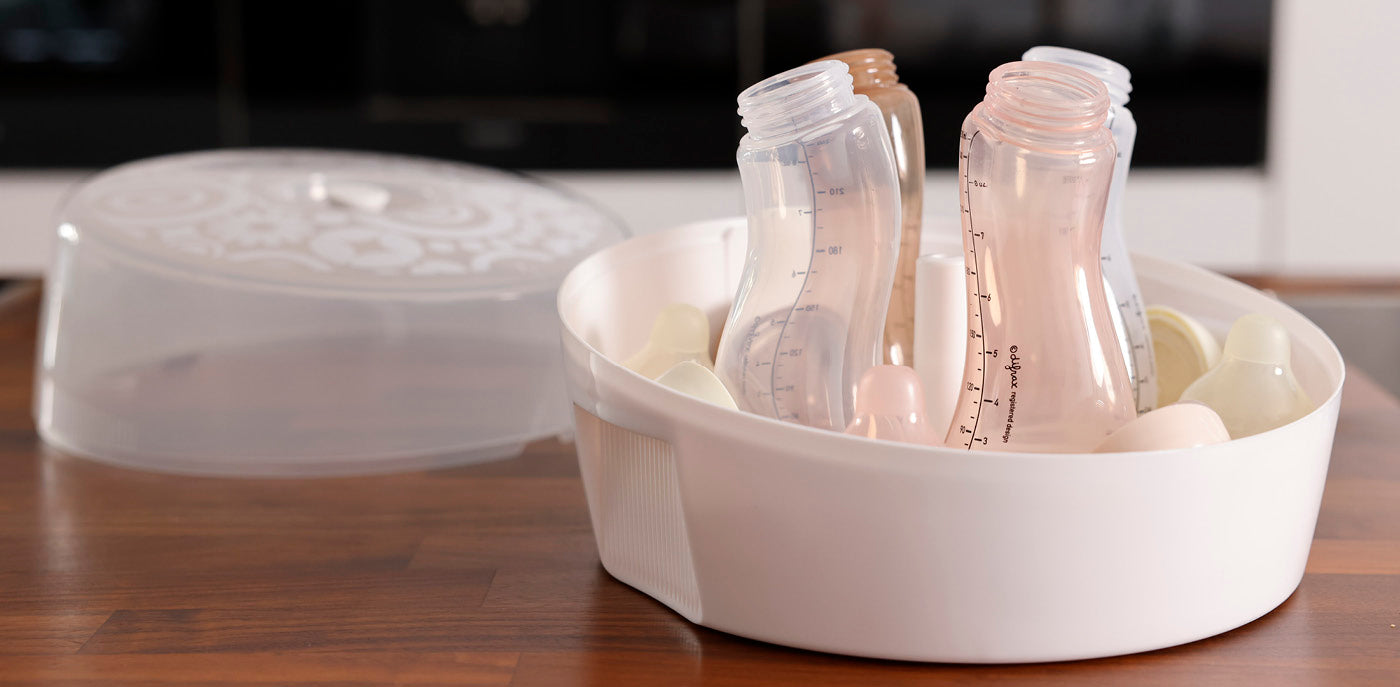
Sterilising with steam is done in an electric steriliser or in the microwave. This is a fast, easy and efficient way. To sterilise in this way, you will need a special machine.
Sterilising by boiling teats and bottles in water is a simple and reliable method. You don't need any extra machines but bottles and teats may wear down quicker due to the high temperature. Which method that is best for you depends on your preferences when it comes to hygiene and how much time you have to sterilise teats and bottles.
How does a bottle steriliser work and do I really need one of those?
Bottle sterilisers for use in the microwave and electrical models makes it easy and quick to sterilise baby bottles. They work with steam, which fights bacteria, without the use of boiling water, which can be dangerous.
An electric steriliser generates its own heat and often keeps bottles sterile for a longer period of time. A microwave steriliser makes use of water and the heat from the microwave.
Both options are practical if you use several bottles per day and like to save time. They are reliable, safe and ideal for parents who need a fast, consistent way of sterilising.
Until what age should you keep sterilising the bottles?
For the baby's first three months, it is important to sterilise the bottles after each time you clean them. After this, you reduce the sterilisation to once per day or a couple of times a week. Make sure that you always clean the bottles properly.
When your child is six months old, your baby's immune system gets stronger which makes the sterilisation less necessary. Your child will then start exploring solid food which means that the use of the bottle is reduced anyway. Sterilising is still a good idea if your child gets sick or is premature. Also if you notice that your child is sensitive to bacteria, it is important to sterilise the bottles.
Common mistakes when sterilising bottles
If you don't clean baby bottles properly, milk residues can build up in the nooks and crannies, teats and threads. This leads to a build up of bacteria which in turn can cause the baby to get sick.
If the bottles are not properly sterilised, they can get a bad smell or discolour which makes the bottle less hygienic. It can also cause the teat to get blocked which makes the baby feed more restlessly.
By rinsing the bottles immediately after use, cleaning them thoroughly and regularly sterilising them, the risks are reduced and your baby remains healthy. Buy yourself a bottle steriliser online.