


How often do you need to replace a teat?
Whenever you give your baby a bottle, you want him/her to feed safely and comfortably. The teat plays a major role in this. But how often do you have to replace a teat? This important part of a bottle actually wears down faster that you might think. This happens due to the drinking, sterilising and the suction strength of your baby. This has an impact on the quality of the teat.
It is smart to replace the teat in time. This way, you prevent leaks and restlessness during feeding and any damages that are not always obvious to the naked eye. We explain how you work this out and how often you should replace the teat.
Why is it important to replace the teat regularly?
The teat becomes softer, more elastic and small tears start appearing that you cannot always see with the naked eye. In a teat that is degrading, bacteria tend to build up faster which changes the flow of milk. This can sometimes make your baby restless or make him/her choke.
Sometimes, a damaged teat can cause it to suddenly start leaking or even break apart. By replacing the teat regularly, you ensure good hygiene and optimal safety during feeding.
What are the indications that a teat needs to be replaced?
You often start noticing small changes that indicate that a teat needs to be replaced:
- Small tears, cracks or broken openings
- Discolourations, such as a yellowish or brown colour
- The teat feels soft or has lost its shape
- A stronger milk flow
- The teat starts to leak earlier than usual
- The teat feels sticky
These are clear signs that the teat is no longer working properly and needs to be replaced.
What are the guidelines for replacing the various teats?
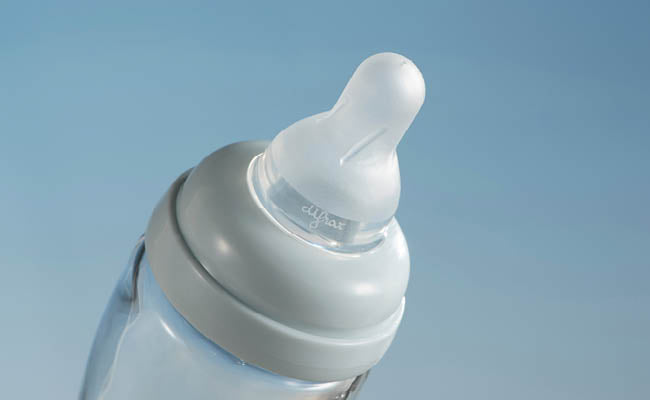
Silicone teats last on average four to six weeks, depending on how much they get used. This material holds its shape better and remains hygienic for longer but will get small cracks after a while or feel less rigid.
Rubber teats get worn out quicker and lose their shape faster than their silicone equivalents. In addition, you will notice how they discolour much quicker and feel sticky. Therefore, it is sensible to replace the teat every three to four weeks.
A number of factors will influence the life span of the teat. Such as how often it is used, how much your baby drinks and the way you clean this part of the bottle. Check regularly that the teat is intact and not worn out and replace the teat as soon as you see any damage.
What impact does usage and cleaning have on the life span of the teat?
Regular cleaning of the teat is very hygienic but this also means that it wears down quicker. The daily boiling or sterilization makes the silicone look dull. Sometimes, small tears can also occur.
Always clean the teats according to instructions. Don't leave the teat too long in the water and avoid too much heat. This is particularly damaging for rubber teats and it makes them less rigid and makes them feel sticky. This is a sign that they need to be replaced.
Save the teat or use several simultaneously?
It is practical to always have a few spare teats at home. This way, you are always prepared if you lose one or need to replace one. Keep clean teats in a sealed container or teat holder for optimal hygiene.
It is also a good idea to keep different sizes or shapes separate so that you always have access the right teat. In addition, put an extra teat in the changing bag and one in the bedroom for night time feeds. To have several teats in several locations reduces the stress and makes sure that feeds are relaxed and worry-free.
Handling the teats safely: practical tips
Always store bottle teats in a closed and clean teat holder and clean them thoroughly after each use. This way, they stay clean for longer. Don't let them lie around in bags or beds since dust and bacteria can collect on them.
Check the teats regularly for tears, stickiness or discolouration and if in doubt, replace them immediately. Always stick to the general guideline of replacing the teat every four to six weeks, depending on material and how often it is used.
With teats from Difrax, you can be sure of a safe, comfortable and hygienic feeding experience. That's great, not just for your baby but also for you. See the range of Difrax teats in de webshop. Do you have questions? Contact us.