





How do you know when you baby needs a larger teat size?
When your baby grows, the speed of drinking changes as does the way in which the baby drinks out of the bottle. A teat that worked perfectly in the beginning can become too slow or too fast after a period of time. This can make feeding times uncomfortable. The right moment to switch to a larger teat size helps to make the drinking more comfortable and relaxed for you and your baby.
Age indications for different teat sizes per brand
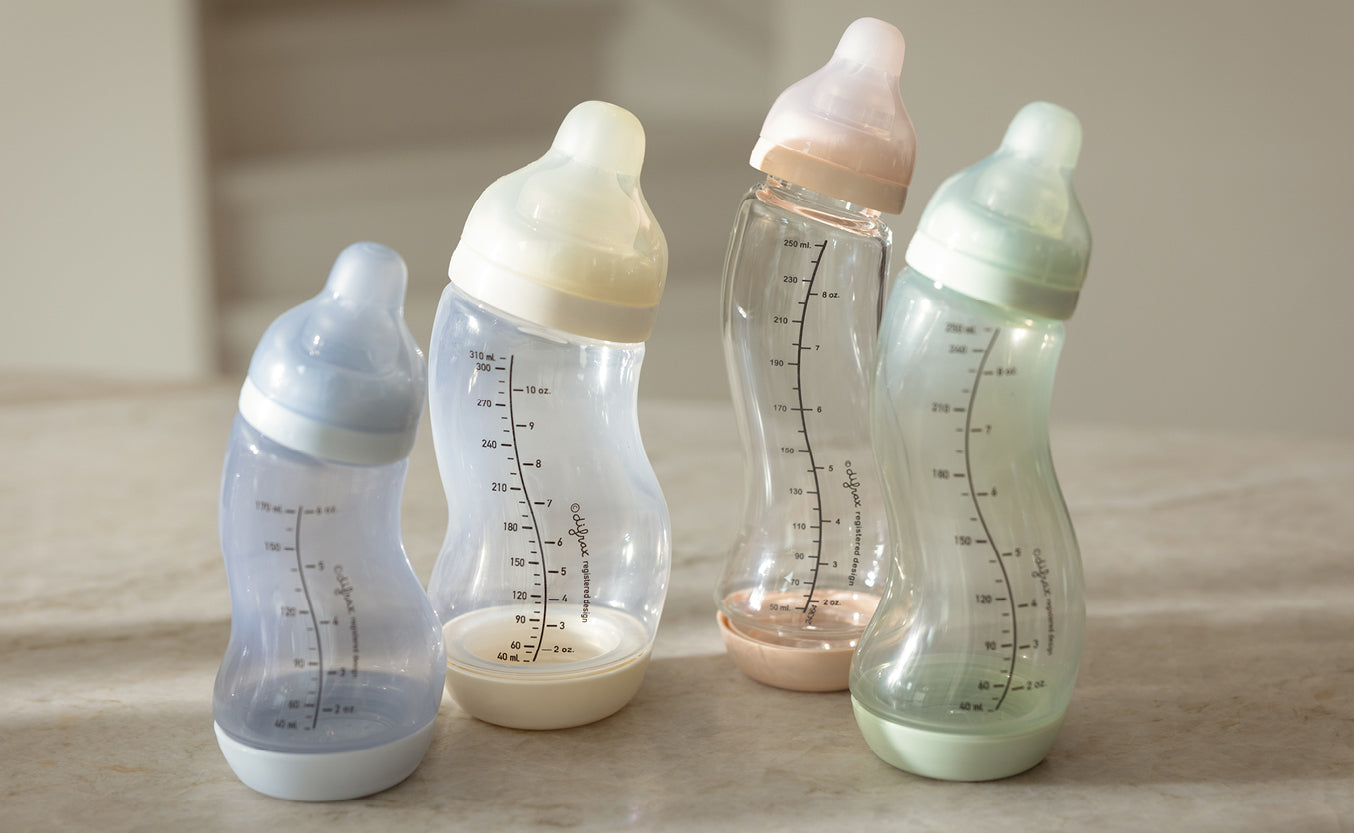
The teat sizes for the baby bottles from Difrax follow the different development stages of your baby. They provide guidance when choosing the right teat size. For newborn babies, we recommend size S since this teat provides a steady milk flow that is suitable for thin feeds such as breast milk or standard bottle feed.
From approx. three months, many babies switch to size M. You will primarily notice that your baby is ready for a new size when drinking takes longer or when the food becomes a little thicker.
When your child reaches approximately six months, is size L often the right size since the drinking strength improves and some babies switch to thicker milk or slightly thicker feed. For older children who eat porridge or thicker feed, there are teats in size XL. These teats are mainly used with the Wide-S bottle.
The ages that are mentioned here are only guidelines. In the end, it is your baby's drinking behaviour that will determine when the next step is necessary.
Signs that the milk flow is too slow for your baby
When the milk flow is too slow, your baby will often let you know during feeding. You may notice that your baby becomes restless, pulling on the teat during feeds or just stops drinking repeatedly since it is too tiresome.
Some babies start sucking harder or start chewing on the teat thinking that it may result in more milk. When the feed lasts a lot longer than usual or where the baby becomes frustrated half way through, these are also signs that the teat size no longer is big enough.
Have you noticed that your baby uses up a lot of energy while drinking or still seems hungry after feeding? If so, this is often the time to take a look at a larger teat size with a somewhat faster milk flow.
Consequences of a teat that is too small or too large
A teat that is too small often means that your child has too work hard to get any food. This means that your baby tires quickly and may be frustrated since there is not enough milk coming through the teat. This quickly leads to longer feeding times, your baby chewing on the teat and greater air intake, which can lead to colic and restlessness.
A teat that is too large has the opposite effect. The milk flows too quickly which means that your baby might choke, has to pause his/her feeding in order to swallow and sometimes even throws up the feed.
Sometimes your baby becomes restless since the flow is not suitable for his or her drinking capacity. In all the cases mentioned here, the wrong teat size makes the drinking uncomfortable for the baby.
Luckily, it is possible to make the transition easier with just a few steps.
Tips on a smoother transition to larger teats
A smoother transition to a larger teat starts with choosing a peaceful time when your baby is relaxed. Only offer the new teat when the baby is not too hungry. This way, he or she can easier get used to the new teat.
Hold your baby more upright the first time you feed the baby with the new teat to make it easier to swallow. Take your time and follow your baby's rhythm and pay attention to signals of choking or restlessness Make sure that you can switch between the old and the new teat if needed. By respecting the baby's tempo and take small steps, your baby will likely get used to the larger teat and continue to drink peacefully.
Teat shapes and flows: What suits your baby best?
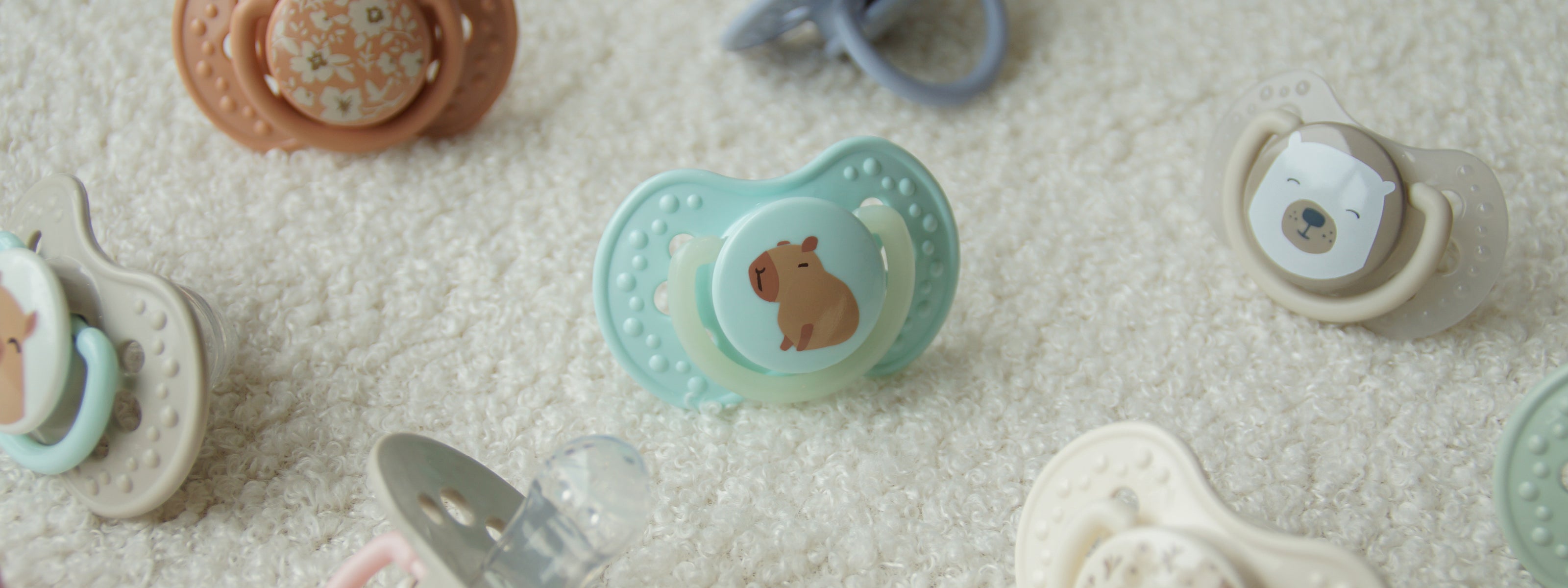
Teat shapes and associated milk flows are important when it comes to how comfortable the feed progresses. Every child has their own preference when it comes to suction strength and drinking speed. Some babies prefer drinking out of a round teat with a relaxed flow. Other babies are better served by a dental teat that better adapts to the shape of the baby's mouth and supports the natural drinking movement.
The type of food you give, such as thin milk or slightly thickened food, also determines which teat and which flow is best suited to your baby. By observing how your baby behaves during drinking you will be able to work out which teat shape and what milk flow is the most comfortable.
Do you want to be sure which teat works best for your situation? See all the different teats from Difrax for the best match. Do you have questions? Please feel free to contact us.