Tummy cramps in your baby: how to recognise them and what you can do
Many babies suffer from tummy cramps in their first months. Your baby then cries loudly and for a long time, pulls up their legs and has a tense tummy. The cramps usually start two to three weeks after birth, are strongest around week six and disappear in most babies at around three to four months. You can't always take them away completely, but you can often reduce them.
How do you recognise tummy cramps?
- Your baby cries loudly and for a long time, for no clear reason.
- The tummy feels tense and bloated.
- Your baby pulls in their legs and arches their back, or stretches their legs instead.
- Your baby passes a lot of wind.
Is your baby passing a lot of wind? Read what it means if your baby breaks wind a lot.

What causes tummy cramps?
A digestive system that still needs to adjust. Before birth, your baby's intestines do very little. After birth, they suddenly have to digest food. Because the digestive system is not yet fully mature, gas and cramps develop more easily.
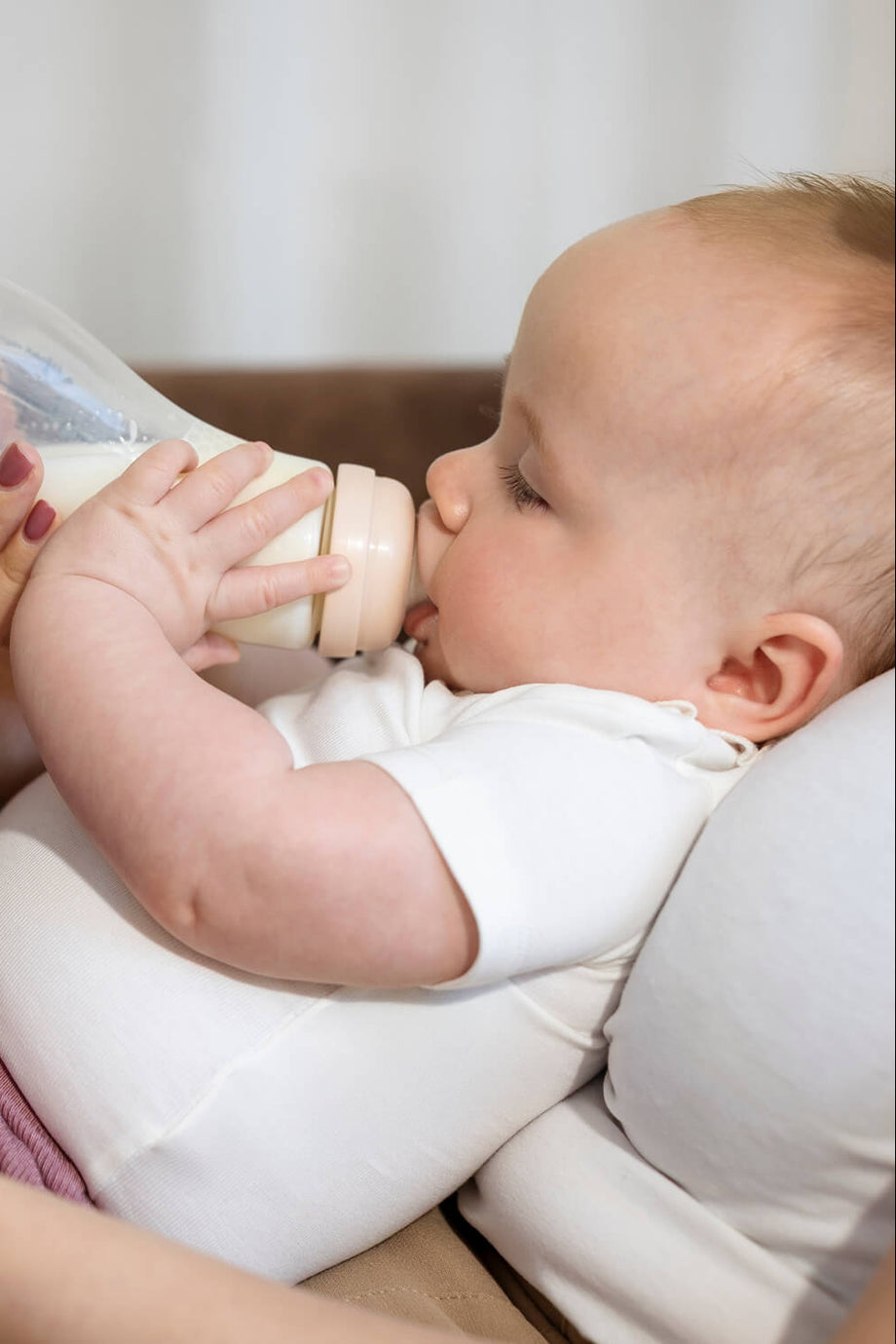
Swallowing air while drinking. If your baby drinks quickly or greedily, they swallow air too. This can happen during breastfeeding, for example when the milk flows fast. With bottle feeding, air can end up in the milk or in the teat. That air can cause tummy cramps, spitting up and burping.
Other causes. Sometimes something else is behind it, such as constipation, reflux or a cow's milk protein allergy. Also read how to recognise silent reflux. Does your baby keep crying inconsolably, or are you unsure? Then contact your child health clinic or GP.
Tips for tummy cramps
- Take your time for each feed. A feed can easily take 15 to 20 minutes. Is the bottle empty much sooner? Then choose a teat with a slower flow or take a short break. Read which bottle teat to choose.
- Keep the teat filled with milk. This way your baby drinks milk instead of air.
- Burp your baby well, during and after the feed. Read our tips for burping your baby.
- Massage the tummy with gentle clockwise circles. This can help your baby relax.
- Don't change the feeding routine too often. The intestines have to adjust every time. Are you bottle feeding and do the cramps continue? Talk to your child health clinic before switching formula.
- No fennel or anise tea. The Dutch Nutrition Centre (Voedingscentrum) advises against it for babies, because it contains estragole.
Does an anti-colic baby bottle help?
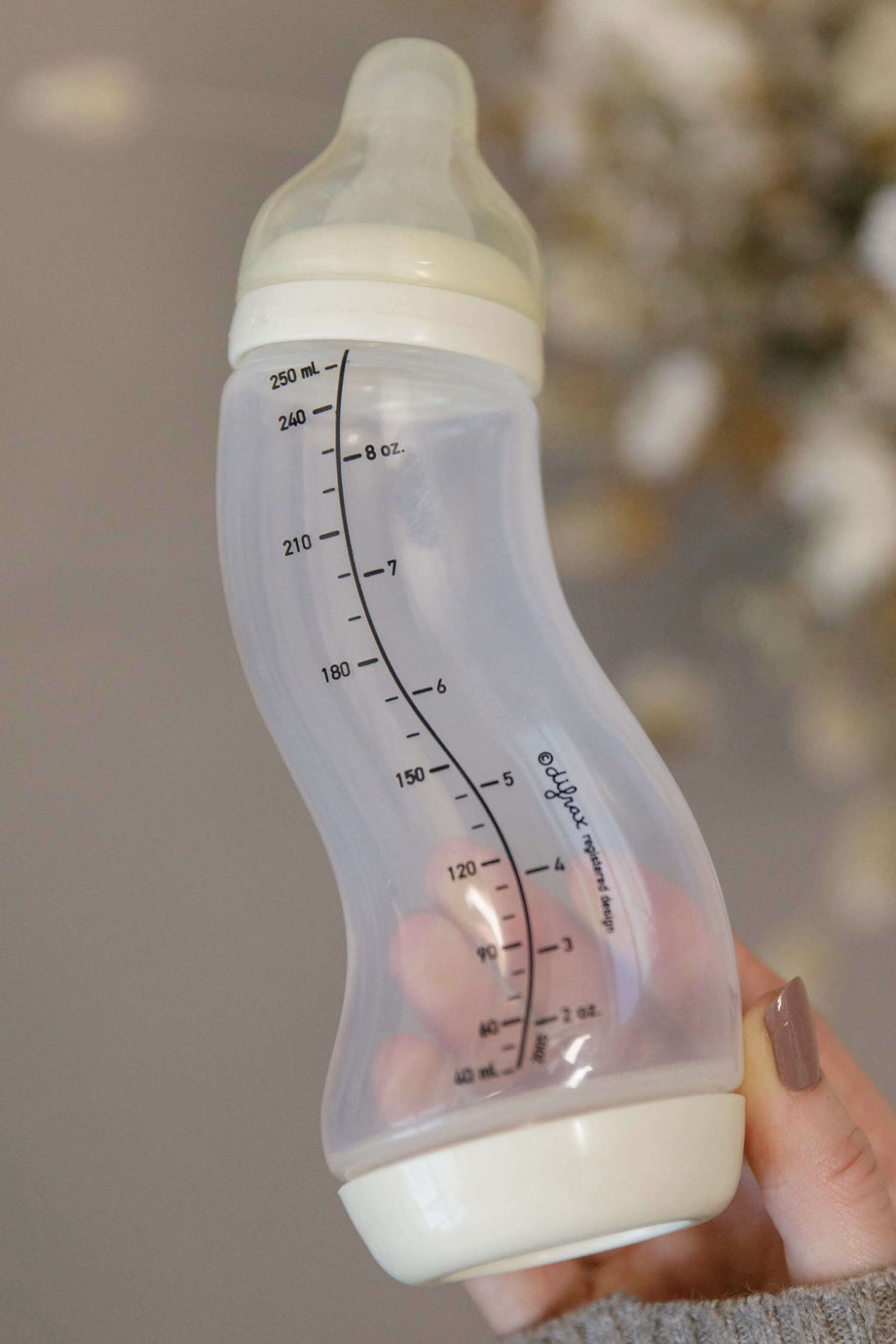
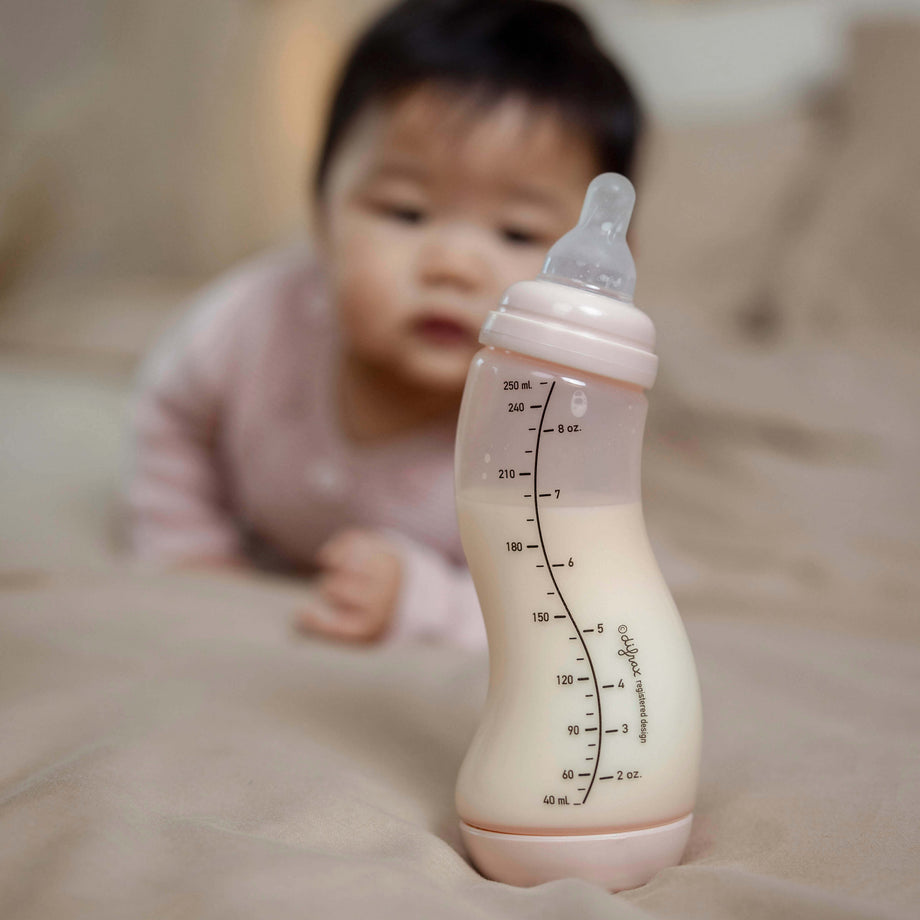
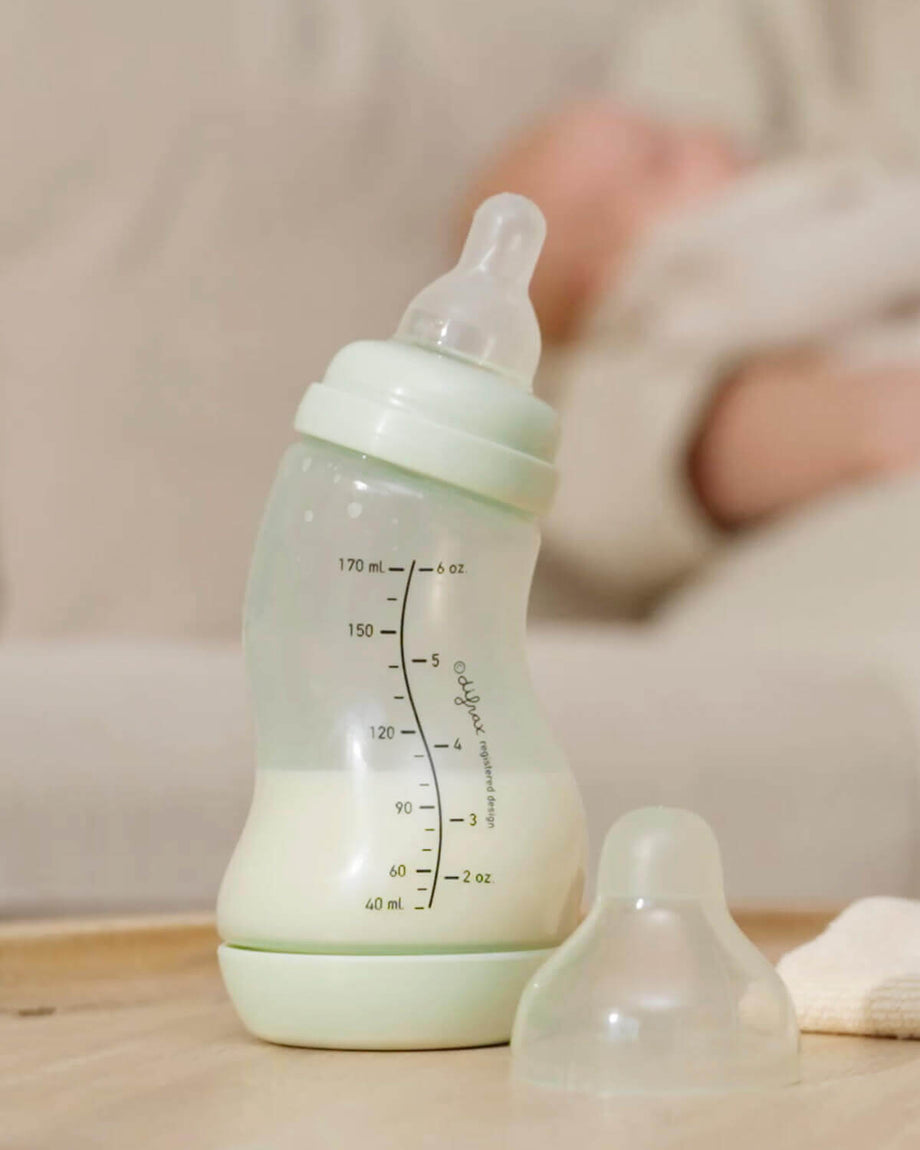
If you bottle feed, a baby bottle with an anti-colic system can help your baby swallow less air. The anti-colic S-bottle from Difrax has the anti-colic valve in the base. This keeps air from mixing with the milk: 100% milk, 0% air. This is how the S-bottle reduces the risk of tummy cramps, spitting up and burping. Want to know how the different systems work? Read how an anti-colic baby bottle works.